
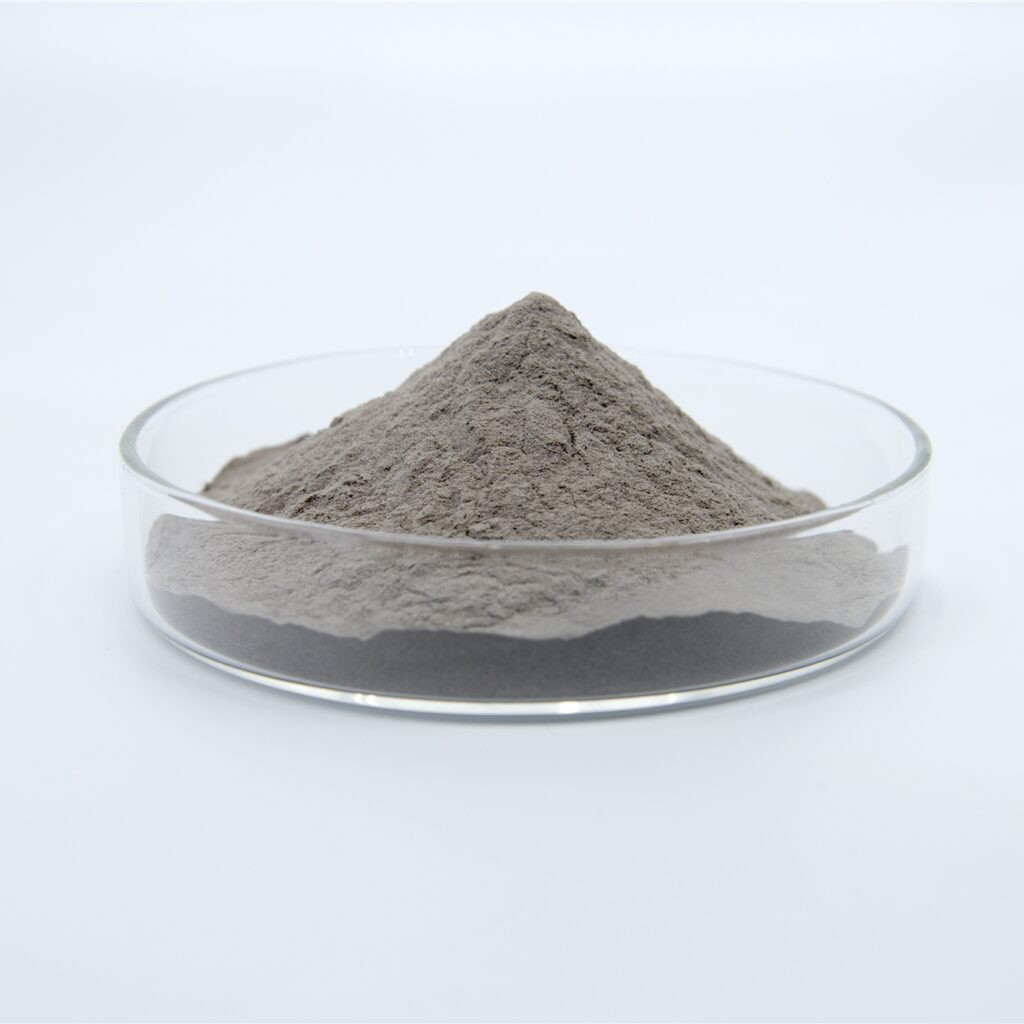
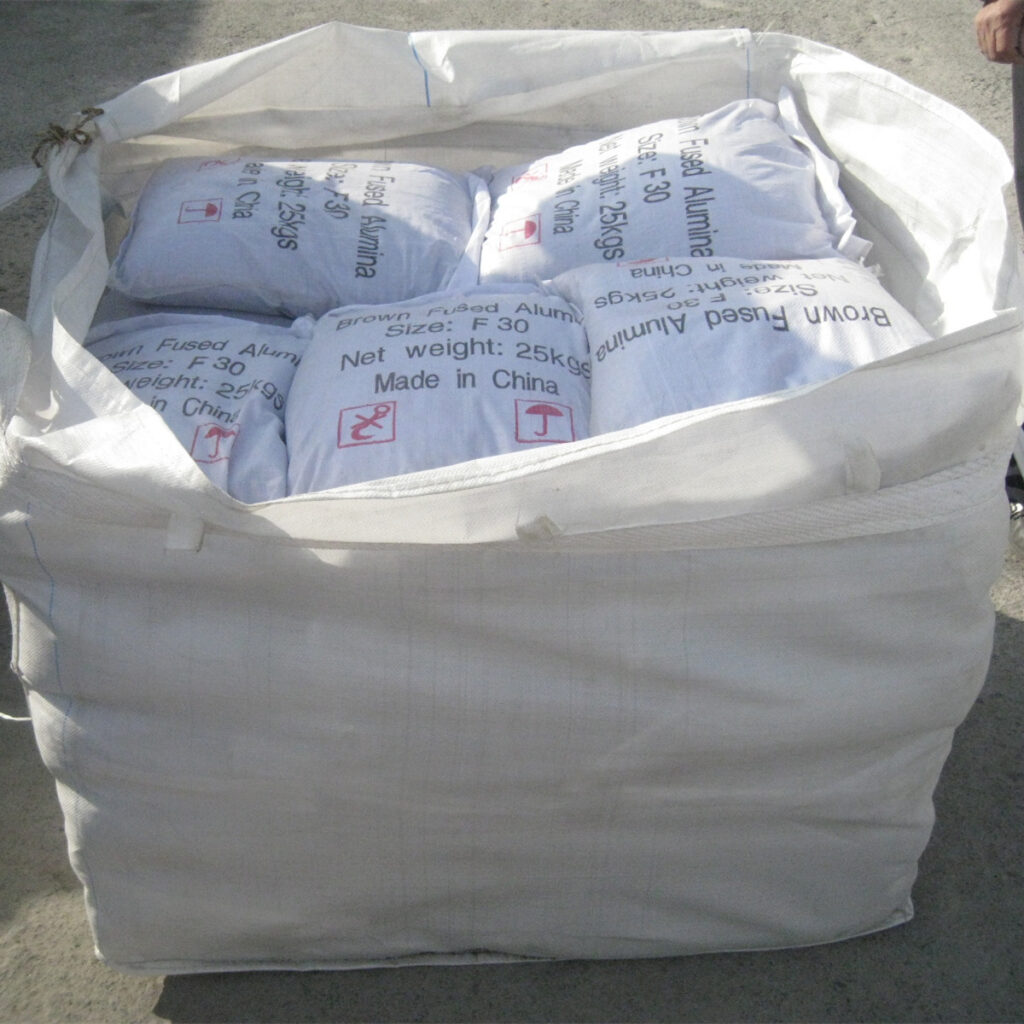
Brown aluminum oxide (also known as brown fused alumina, BFA) is a crucial abrasive additive in many friction material formulations, especially in Non-Asbestos Organic (NAO) and semi-metallic brake pads.
1. Material Profile: Brown Aluminum Oxide
Composition: Produced by fusing bauxite (aluminum ore) with coke and iron in an electric arc furnace. It consists primarily of α-Al₂O₃ but contains 2-4% titanium dioxide (TiO₂) and other impurities (silica, iron oxides).
Key Properties (vs. White Aluminum Oxide):
High Hardness: Mohs hardness ~8.9 (slightly lower than white alumina’s 9.0, but still extremely hard).
High Toughness: Its most distinguishing feature. The TiO₂ promotes a tougher crystalline structure, making it more resistant to crushing or fracturing under impact.
Self-Sharpening: When fractured, it breaks along cleavage planes to reveal new sharp edges. This helps maintain consistent abrasive action.
Cost-Effective: Generally less expensive than white aluminum oxide due to the use of lower-cost raw materials (bauxite vs. purified alumina).
2. The Significance of 325 Mesh
Particle Size: 325 mesh corresponds to an average particle size of approximately 44 microns (0.044 mm). This is considered a medium-fine powder.
Why This Size Matters for Brake Pads:
Controlled Abrasion: Fine enough to integrate uniformly into the friction matrix and provide consistent, predictable friction without being overly aggressive on the rotor.
Surface Contact: Provides a large number of contact points for effective friction modulation without the excessive “digging” associated with coarser grits.
Noise Mitigation: Finer particles are less likely to create high-frequency squeal compared to very coarse grits, though formulation balance is still key.
Dispersion: Mixes well with other powders (resins, fibers, lubricants) for a homogeneous compound.
3. Primary Functions in the Brake Pad Formulation
Brown alumina 325-mesh acts as a performance-modifying abrasive filler:
Friction Coefficient Stabilizer & Modifier:
Prevents Glazing: Its hard, sharp particles micro-score the friction surface of both the pad and rotor, preventing the formation of a smooth, low-friction glassy layer (“glazing”).
Maintains High-Temperature Friction: Helps counteract friction fade at elevated temperatures by continuously renewing the friction interface. Its toughness ensures it lasts under high shear forces.
Wear Management:
Increases Pad Wear Resistance: Enhances the overall durability of the pad composite.
Defined Rotor Wear: It is a controlled abrasive, meaning it will cause measurable rotor wear. This is a calculated trade-off. The consistent, fine abrasion of 325-mesh particles is preferred over the erratic, gouging wear from uncontrolled or coarse abrasives.
Thermal & Mechanical Role:
Heat Conduction: Aluminum oxide has good thermal conductivity, aiding in dissipating heat from the friction interface.
Structural Integrity: The hard particles add mechanical strength to the friction matrix.
4. Typical Application & Formulation Considerations
Application Segments: Widely used in OE-replacement, mid-to-high-performance aftermarket, and commercial vehicle brake pads where a robust, cost-effective friction modifier is needed.
Typical Dosage: Usually ranges from 3% to 8% by weight of the total friction mix. The exact percentage is a critical balance determined through extensive formulation testing.
Key Synergies & Balance:
Works in conjunction with lubricants (e.g., graphite, coke) to create the desired friction level and curve (mu vs. temperature).
Must be balanced with reinforcing fibers (aramid, steel, glass) and the resin binder.
The toughness of brown alumina makes it particularly suitable for formulations requiring durability under heavy loads or aggressive driving.
5. Advantages & Challenges
Advantages:
Cost-Effective Performance: Provides excellent abrasive action and friction stability at a lower cost than premium alternatives.
Durable & Tough: Withstands high shear stresses better than more brittle abrasives.
Reliable Friction: Delivers stable and predictable friction characteristics across a wide temperature range.