
Brown Fused Alumina (BFA) Blasting Media: Key Advantages
Brown Fused Alumina is a premier choice for abrasive blasting due to its unique combination of physical and chemical properties. Here are its core advantages, structured for clarity:
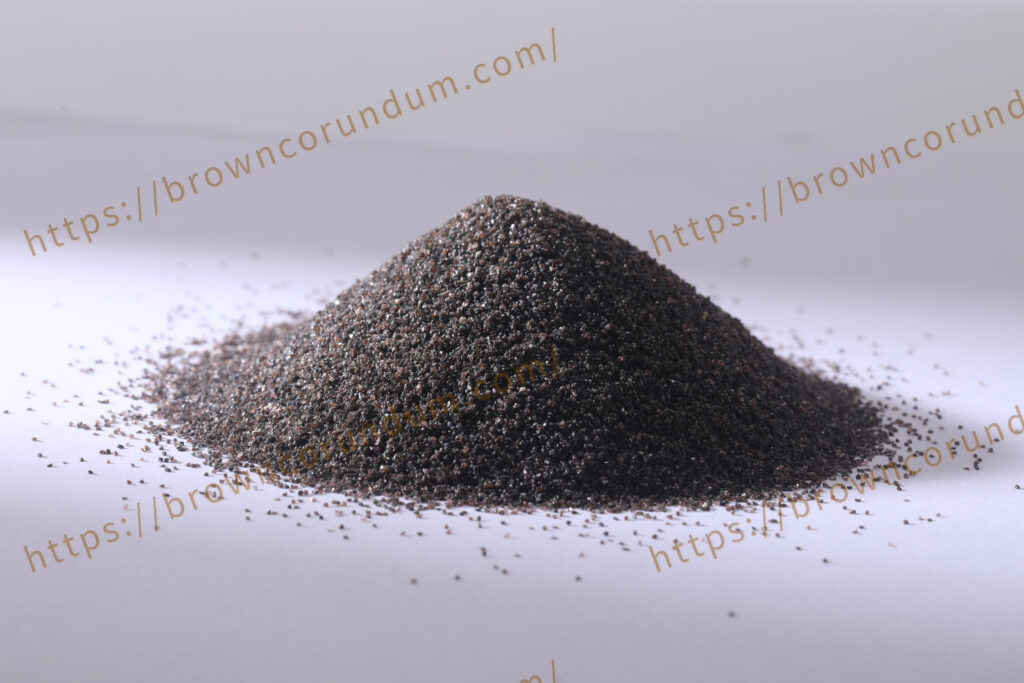
1. Superior Hardness & Durability
High Hardness: With a Mohs hardness of ~9.0, it is exceptionally effective on hard substrates like hardened steel, alloys, and cast iron.
High Durability/Toughness: It possesses excellent fracture resistance, meaning grains break down slowly. This allows for high reusability (multiple cycles), leading to lower media consumption and long-term cost efficiency.
2. Exceptional Cleaning & Cutting Speed
Sharp, Blocky Grain Shape: The grains have angular, multifaceted edges that act like tiny cutting tools. This results in a fast, aggressive cutting action, making it ideal for rapid removal of tenacious scale, heavy rust, old coatings, and weld slag.
3. Consistency & Low Breakdown
Low Friability: It generates minimal dust during blasting because it does not pulverize easily upon impact. This maintains operational visibility, reduces airborne particulate, and extends the life of blast equipment (liners, nozzles).
4. Chemical Inertness & Purity
Stable Composition: Primarily composed of aluminum oxide (Al₂O₃), it is chemically inert. It does not react with the workpiece or introduce contaminants, ensuring a chemically clean surface that is ideal for subsequent coatings, plating, or bonding.
Thermal Stability: It can withstand high temperatures, making it suitable for specialized applications.
5. Enhanced Safety & Environmental Profile
Silica-Free: Unlike quartz sand, it contains negligible free silica. This eliminates the risk of silicosis, a serious occupational lung disease, making it a much safer, health-compliant alternative.
Recyclable: Spent media can often be reclaimed for other industrial uses (e.g., in refractory materials), reducing waste.
6. Versatility in Application
Suitable for both dry and wet blasting processes.
Serves multiple purposes: cleaning, deburring, descaling, surface profiling/etching (to create an anchor pattern for coatings), and peening (for surface strengthening).
7. Economic Efficiency
While the initial purchase price may be higher than some alternatives (e.g., coal slag, garnet), its high reusability and productivity (fast cutting speed) result in a lower total operating cost per project.
Comparison vs. Common Alternatives
| Feature | Brown Fused Alumina | Quartz Sand | Coal Slag | Steel Grit |
|---|---|---|---|---|
| Hardness | Very High (9.0) | Medium-High (7.0) | Medium-High (6-7) | Very High |
| Dust Creation | Low | Very High | Medium | Low |
| Reusability | High | Very Low (Single Use) | Low | Very High |
| Health Risk | Low (Silica-Free) | Very High (Silicosis) | Low | Low (Heavy Metal Risk) |
| Primary Use | Profiling, Cleaning | (Largely Obsolete) | Cleaning, Stripping | Cleaning, Peening |
Typical Applications
Heavy Industry: Surface preparation of steel structures, ship hulls, storage tanks, pipelines.
Metalworking: Cleaning forgings and castings, removing heat treat scale.
Aerospace & Automotive: Critical component cleaning and surface texturing for adhesion.
General Manufacturing: Creating a uniform anchor profile on metal surfaces prior to painting or coating.