
Product Introduction
Brown Fused Alumina (BFA) is produced by melting high-quality bauxite in an electric arc furnace. It features sharp angular grain shape, high hardness (Mohs 9.0), good mechanical toughness and moderate self-sharpening property. Specially graded low-iron brown fused alumina is widely adopted as blasting abrasive for aluminum and stainless steel cookware prior to coating application.
| Al2O3 | Fe2O3 | Ti2O | CaO | SiO2 |
| ≥ 95.0% | ≤0.3% | 1.7-3.4% | ≤0.42% | ≤0.1% |
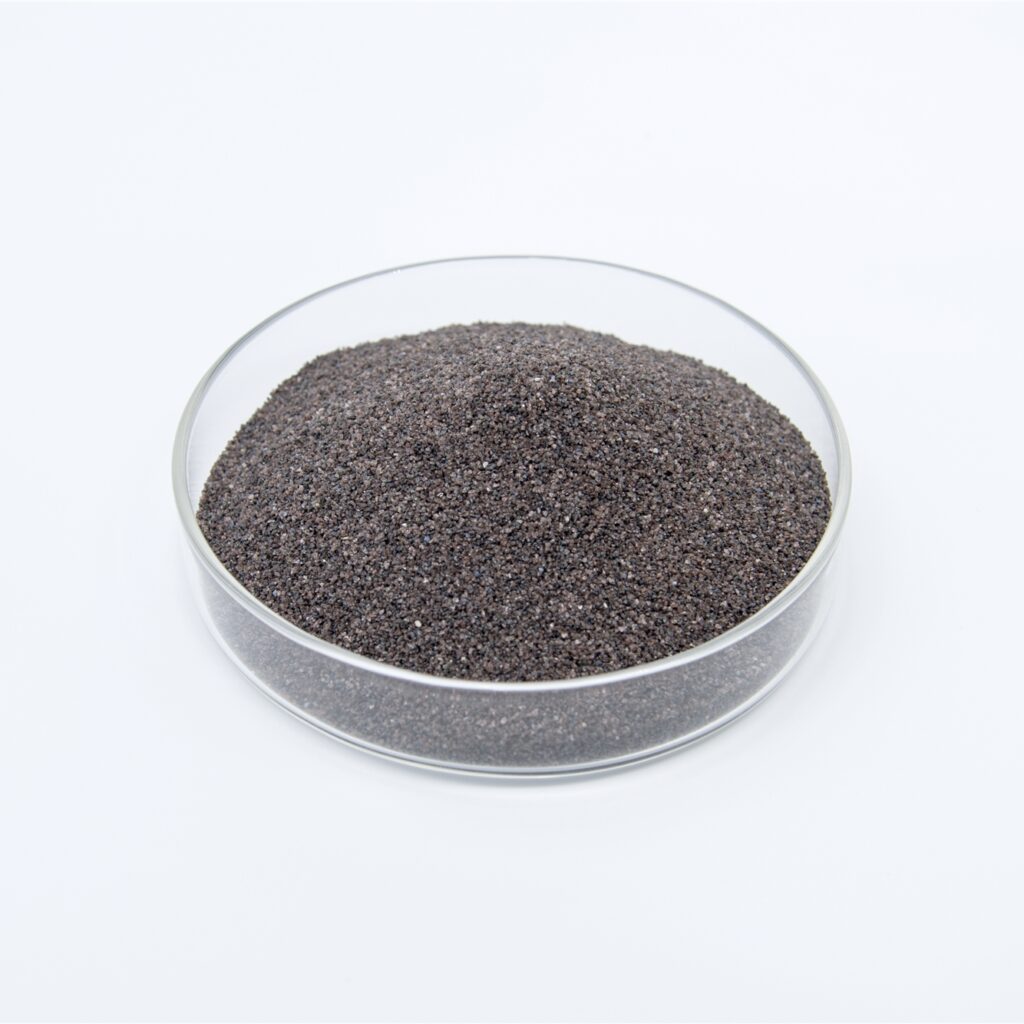
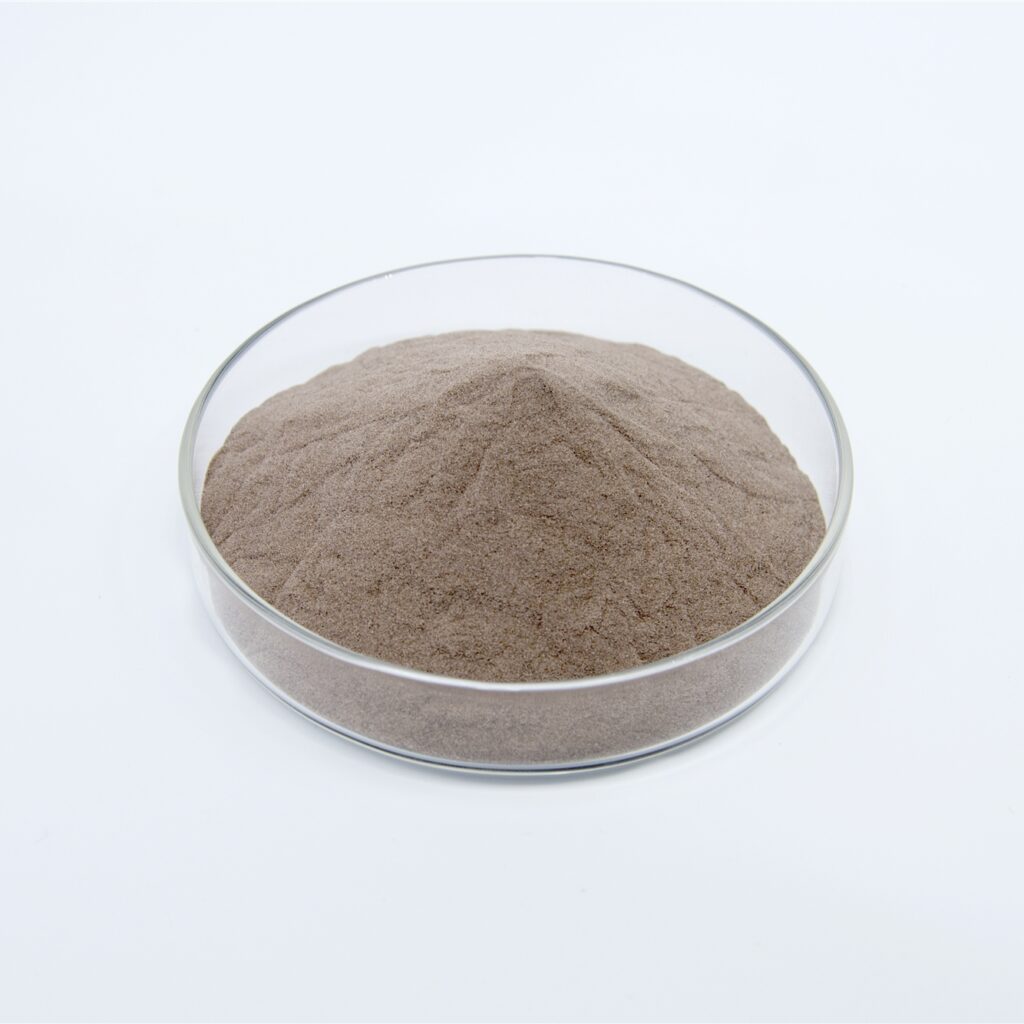
Brown Fused Alumina Functions on Cookware
- Remove surface contaminants: release agent, casting carbon residue, oxide film, oil stains and minor scratches on die-cast aluminum cookware.
- Create uniform anchor pattern (controlled surface roughness Ra) to significantly improve adhesion of non-stick PTFE coating, ceramic coating or powder coatings.
- Achieve consistent matte surface finish for decorative blasting requirements.
Advantages of Brown Fused Alumina for Cookware Blasting
- Excellent grain geometry for reliable coating adhesion Brown fused alumina consists of sharp, angular crushed particles. When blasting die-cast aluminum and stainless steel cookware, it creates a uniform, jagged anchor pattern (controlled Ra roughness). This mechanical texture delivers far stronger bonding for subsequent non-stick PTFE coatings, ceramic coatings and powder coatings compared to spherical media such as glass beads.
- Balanced hardness and toughness for recyclability With Mohs hardness 9 and good inherent toughness, BFA offers strong cutting power to remove casting residues, release agents, oxide films and light scratches. Unlike more brittle silicon carbide, it does not disintegrate rapidly into fine dust under repeated impact. It can be recycled multiple times in closed blasting cabinets, effectively lowering overall abrasive consumption cost.
- Cost-performance superiority Compared with white fused alumina (WFA), brown fused alumina is significantly more economical while meeting most cookware production requirements. For standard aluminum non-stick cookware lines that implement proper magnetic separation and post-blasting cleaning, low-iron grade BFA is the optimal cost-effective choice.
- Controllable surface roughness via graded grit sizes A full range of FEPA grits (F60, F80, F100, F120 etc.) is available. Manufacturers can select suitable grain sizes to tune surface roughness: coarser grits for heavy surface cleaning, finer grades for delicate, consistent matte appearance matched to thin coating systems.
- Free of free crystalline silica, safe for workplace compliance Brown fused alumina does not generate hazardous respirable silica dust. It serves as a legal and environmentally acceptable replacement for banned silica sand, complying with occupational health standards in most global markets.
- Adaptable to common cookware blasting processes It works well with pressure blasting and suction blasting equipment. Under properly controlled low air pressure (0.25–0.4 MPa), BFA efficiently treats thin-walled aluminum cookware with minimized risk of particle embedding and substrate deformation.
- Suitable for both pretreatment blasting and decorative matte finishing Apart from surface roughening before coating, BFA can also produce consistent uniform matte surface texture for cookware items requiring direct decorative blasting (where allowed by surface cleanliness standards).